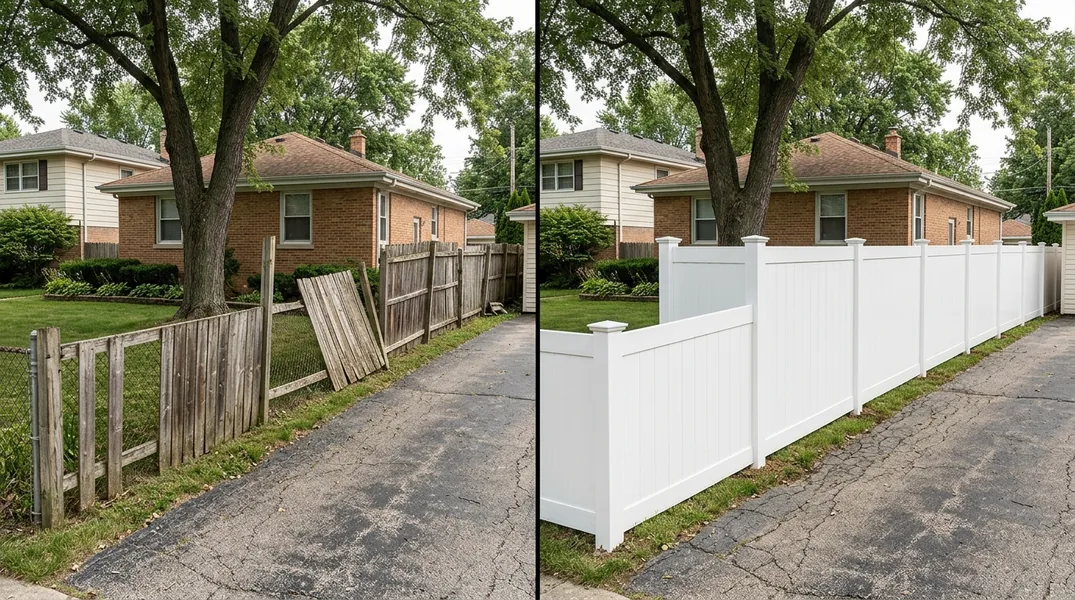
Cedar vs Vinyl vs Chain Link: Understanding Your Options
Choosing the right fence for your Chicago backyard is one of the most important decisions you'll make as a homeowner. Your fence serves multiple purposes: it defines your property line, provides privacy and security, enhances curb appeal, and protects your family and pets. With three dominant materials on the market, cedar, vinyl, and chain link, each brings distinct advantages and drawbacks that deserve careful consideration.
The fence you select will live with you for years to come, weathering Chicago's harsh winters, humid summers, and unpredictable spring weather. Before you settle on any material, it's essential to understand how each performs in our climate, what maintenance demands you'll face, and how your budget aligns with long-term value. This guide walks you through the key differences so you can make an informed choice tailored to your specific needs and lifestyle.
Wood Fence Installation: The Classic Cedar Choice
Wood & Privacy Fence Installation remains the most popular choice among homeowners who value aesthetics and natural warmth. Cedar, in particular, stands out as a premium wood option because it resists rot and insects better than standard pressure-treated lumber, thanks to its natural oils and tight grain structure. A cedar fence creates an attractive, timeless look that complements virtually any home style, from traditional to contemporary. Many homeowners in Chicago choose cedar specifically because it can be stained or left to weather naturally, offering design flexibility that other materials simply cannot match.
However, cedar requires consistent maintenance to preserve its beauty and structural integrity. You'll need to stain or seal your fence every two to three years, especially in our climate where freeze-thaw cycles can damage wood fibers. Cedar also demands regular inspection for signs of rot, pest damage, or loose boards. Despite these demands, many homeowners find the investment worthwhile because a well-maintained cedar fence can last 15 to 20 years and provides superior privacy and noise reduction compared to chain link or vinyl alternatives.
Vinyl Fencing: Low-Maintenance Durability
Vinyl & PVC Fence Installation has gained tremendous popularity over the past two decades, and for good reason. Vinyl fences are manufactured from polyvinyl chloride, a synthetic plastic material that resists rot, insects, and weathering without any staining, sealing, or painting required. For busy homeowners who want the appearance of a quality fence without the maintenance burden, vinyl offers an attractive solution. Vinyl comes in multiple styles and colors, including options designed to mimic the look of wood, and it holds its appearance year after year with nothing more than occasional washing.
The primary drawback of vinyl is its higher upfront pricing compared to cedar or chain link. Vinyl typically costs 25 to 40 percent more than wood initially, though this premium often pays for itself over time when you factor in eliminated maintenance costs. Vinyl also has limitations in extreme cold, as it can become brittle in harsh winters, and it doesn't offer the same level of sound dampening that a solid wood fence provides. Additionally, if a vinyl panel is damaged, repairs can be more complicated and expensive than simply replacing a few wood boards.
Chain Link Fencing: Budget-Friendly and Practical
Chain Link Fence Installation represents the most economical option for homeowners on a tight budget or those who prioritize function over aesthetics. Chain link fences are durable, require minimal maintenance, and can last 15 to 20 years with proper care. They're ideal for containing pets, securing a perimeter, or creating a temporary boundary. The open weave design means chain link doesn't obstruct views, which makes it popular for front yards where sightlines matter or for commercial properties.
The obvious limitation of chain link is that it provides no privacy. If privacy is important to you, chain link alone won't meet your needs unless you add a privacy slat insert, which increases both material and installation costs. Chain link also offers minimal noise reduction and can appear utilitarian or industrial compared to the warmth of wood or the clean finish of vinyl. For many Chicago homeowners seeking backyard seclusion, chain link is rarely the first choice, but it remains an excellent option for specific applications like dog runs, side yards, or properties where budget is the primary constraint.
Durability and Weather Resistance in Chicago's Climate
Chicago's climate presents unique challenges for any fence material. Our winters bring ice, snow, and freeze-thaw cycles that stress materials relentlessly. Cedar wood can split and warp when exposed to these temperature swings, especially if not properly sealed and maintained. Vinyl becomes more brittle in extreme cold, though quality vinyl formulations are engineered to withstand northern climates. Chain link, being metal, can rust if the galvanized coating is compromised, though modern chain link is typically treated to resist corrosion.
Summer humidity and occasional heavy rains also factor into the durability equation. Cedar requires vigilant protection against moisture penetration, or it will develop rot and mildew. Vinyl handles moisture exceptionally well and won't rot, though algae or mildew can occasionally develop on the surface. Chain link's open design means water drains through it freely, eliminating pooling issues. If durability in harsh conditions is your top priority, vinyl edges out the competition because it requires no seasonal maintenance and withstands Chicago winters without cracking, splitting, or rusting.
Cost Comparison: Budget vs Long-Term Value
When evaluating fence pricing, you must consider both installation costs and lifetime value. Chain link typically costs between $8 and $15 per linear foot installed, making it the most affordable upfront option. Cedar wood fencing generally runs $15 to $30 per linear foot, depending on wood grade and design complexity. Vinyl fencing is the most expensive, ranging from $20 to $40 per linear foot or more for premium styles. For a 150-foot fence line, these differences translate to thousands of dollars at installation.
However, the real cost story emerges over time. Cedar demands regular maintenance, staining, sealing, and occasional board replacement, which can total $500 to $1,500 every few years. Vinyl requires virtually no maintenance beyond occasional cleaning, making its higher initial investment more economical over a 20-year lifespan. Chain link sits in the middle, needing occasional rust treatment or post replacement but far less than cedar. When you calculate total cost of ownership, vinyl often provides the best long-term value for homeowners who plan to stay in their homes for many years. If you're uncertain about your budget or want a detailed breakdown for your specific project, Chicago Fence Pros can provide a free estimate tailored to your property and preferences.
Making Your Decision: Which Fence Material Is Right for You?
Your choice ultimately depends on three key factors: your priorities regarding privacy, your willingness to perform maintenance, and your budget. If privacy and natural aesthetics are paramount, and you enjoy regular home maintenance, cedar is an excellent choice. If you want a maintenance-free fence and don't mind paying more upfront, vinyl delivers peace of mind and consistent beauty. If your primary goal is containing pets or securing a perimeter on a limited budget, chain link serves its purpose admirably.
Consider also your home's architectural style and neighborhood character. A rustic property might call for cedar's natural warmth, while a modern home could benefit from vinyl's clean lines. Think about how long you plan to stay in your home. If you're building long-term equity, investing in vinyl or quality cedar makes sense. If you're preparing to sell within a few years, a well-maintained cedar fence or attractive vinyl option can boost curb appeal and resale value more effectively than chain link.
The team at Chicago Fence Pros has installed hundreds of fences across the region and understands the specific demands of our climate and neighborhoods. Whether you're leaning toward cedar, vinyl, or chain link, we can help you evaluate your options, discuss maintenance requirements, and explain how each material performs in our local conditions. Call us today at (872) 259-5832 or visit our website to request a free estimate for your backyard project. Let's find the perfect fence for your home.
Looking for a professional tree service in Chicago? Chicago Fence Pros responds fast for all your fence needs.
Get a Free Quote