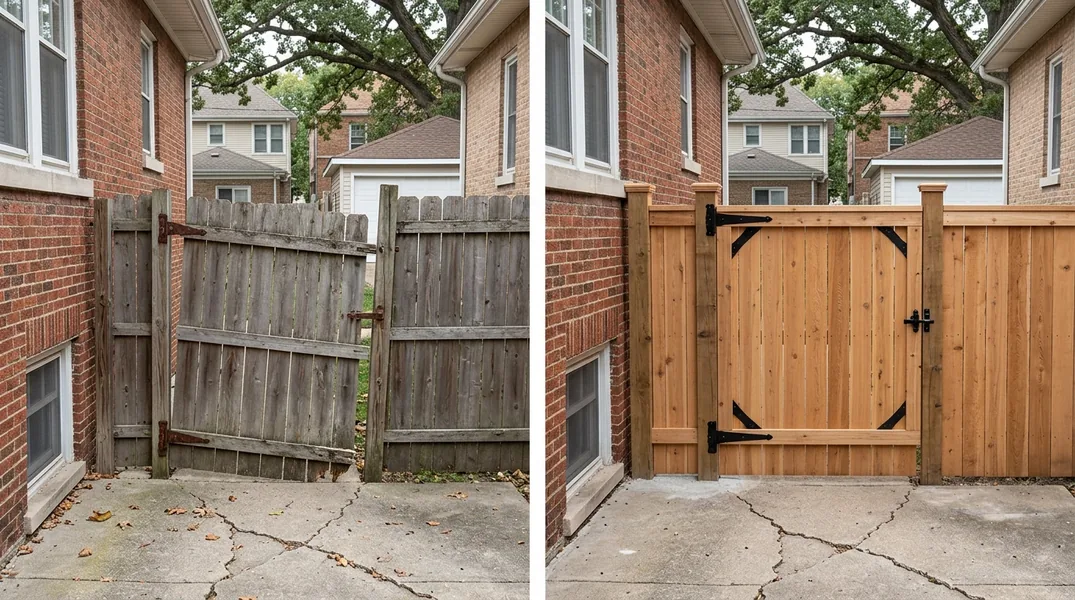
Understanding the Chicago Bungalow Lot Layout
Chicago's classic bungalows are architectural treasures, but their lot configurations can present real puzzles when it comes to fencing. Unlike suburban homes with expansive yards and clear property lines, the typical Chicago bungalow sits on a narrow, deep lot with a gangway on one or both sides, an alley running behind the property, and often a detached garage accessed via that alley. Understanding this layout is the first step toward planning a fence that works with your property rather than against it.
The gangway, that narrow strip between your home and your neighbor's, is typically 3 to 5 feet wide and runs the full depth of the lot. Many homeowners assume they can fence this space, but property lines and easements often complicate matters. The alley behind your home, meanwhile, is usually a public right-of-way maintained by the city, which means you cannot legally block it or fence it off entirely. Your rear garage, accessed via this alley, needs clear access for vehicles. These constraints mean a one-size-fits-all fencing approach simply won't work for a bungalow lot.
Navigating Gangway Fencing: Rules and Practical Solutions
The gangway presents one of the most common fencing dilemmas for bungalow owners in Chicago. Many homeowners want to fence their gangway for privacy and to prevent neighbors' pets or children from wandering through. However, gangways are often subject to easements, and Chicago's municipal code has specific rules about what you can and cannot do. Before installing any fence in a gangway, you must verify your property deed and check with the city to confirm whether an easement exists and what restrictions it places on your fencing options.
If your gangway is clear of easements, Wood & Privacy Fence Installation can work, but the narrow width means you'll typically install a 4 to 5 foot tall fence rather than a full 6 foot privacy fence. Some homeowners opt for Vinyl & PVC Fence Installation in gangways because vinyl resists moisture and requires less maintenance in these tight, often damp spaces. Another practical solution is a partial fence that covers only the portion of the gangway visible from your patio or main living area, leaving the front section open. This approach respects easement rights while still providing the privacy you want where it matters most.
Alley Garage Fence: Creating Privacy Without Blocking Access
Your rear garage and the alley that serves it require a different fencing strategy altogether. You cannot fence off the alley itself, as it is public property and must remain accessible to city services, emergency vehicles, and your neighbors. However, you can fence the area immediately around your garage and along your rear property line in ways that maintain alley access while creating a more private, defined yard space.
The most effective approach is to install a fence along your rear property line that runs parallel to the alley, positioned at least a few feet back from the alley itself. This leaves the alley clear while still establishing your property boundary and adding privacy to your backyard. If your garage opens directly onto the alley, consider a partial fence or gate system that allows vehicle access while discouraging foot traffic through your yard. Wood & Privacy Fence Installation works well for rear property lines, as does Chain Link Fence Installation if you prefer a more open, less expensive option. The key is working with a local contractor who understands Chicago's alley regulations and can help you design a fence that serves your privacy needs without violating city code.
Property Lines, Easements, and Permit Requirements
Before you drive a single fence post into the ground, you need to know exactly where your property lines are and whether any easements affect your land. An easement is a legal right that allows someone else (often the city, a utility company, or a neighbor) to use part of your property for a specific purpose. In Chicago bungalow neighborhoods, easements are common in gangways and along rear property lines. Ignoring an easement and building a fence anyway can result in an expensive removal order from the city and potential legal action from the party holding the easement rights.
To find out if your property has easements, review your property deed and the plat map filed with Cook County. You can also contact the City of Chicago's Department of Planning and Development or consult a surveyor if you want absolute certainty. Once you understand your property lines and any easements, you'll need a permit before installing your fence. Chicago requires permits for most residential fencing projects, and the permit application process typically involves submitting your fence plans and proof that you own the property. The good news is that a reputable local fencing contractor can often handle the permit process for you. When you contact Chicago Fence Pros at (872) 259-5832, our team can discuss your specific lot layout, help you understand your legal obligations, and guide you through the permitting process.
Material Choices for Narrow City Yards
The constraints of a bungalow lot mean that your material choice matters more than it might in a suburban setting. Wood offers classic beauty and excellent privacy, but in tight gangways where moisture can be a problem, it requires regular maintenance to prevent rot and warping. Vinyl provides durability and low maintenance, making it ideal for spaces where you cannot easily access both sides of the fence for staining or repairs. Chain link is affordable and allows visibility, which can be important in narrow spaces where you want to maintain some openness despite the tight layout.
For alley-facing fences and rear property lines, many Chicago homeowners choose wood for its aesthetic appeal and ability to match the character of their historic bungalow. For gangway fences, vinyl or vinyl-coated chain link often makes more practical sense. Consider also the visual impact on your neighbors and the street. A tall, solid wood fence can feel oppressive in a narrow gangway, while a more open fence style maintains the neighborhood's character. Your contractor can show you examples of different materials and styles installed on similar Chicago lots and help you choose an option that balances privacy, durability, maintenance, and aesthetics.
Wood & Privacy Fence Installation Cost in Chicago: What to Budget
The pricing for fencing a bungalow lot in Chicago varies based on the materials you choose, the total linear footage you need to fence, site conditions, and permit costs. A gangway fence, because of its narrow width and shorter height, typically costs less per linear foot than a full privacy fence. However, the total project cost depends on how much of your property you want to enclose. If you are fencing a gangway plus a rear property line, you are looking at a more substantial investment than a single-section fence.
Wood privacy fencing generally runs between $25 and $50 per linear foot installed in the Chicago area, depending on the wood grade and fence height. Vinyl costs more upfront, typically $30 to $60 per linear foot, but lasts longer with minimal maintenance. Chain link is the most budget-friendly option at $8 to $20 per linear foot. Permit costs in Chicago typically range from $100 to $300. For a detailed estimate tailored to your specific bungalow lot, contact Chicago Fence Pros for a free estimate. Call us at (872) 259-5832 to discuss your project, and we can provide accurate pricing based on your exact measurements, material preferences, and site conditions.
Looking for a professional tree service in Chicago? Chicago Fence Pros responds fast for all your fence needs.
Get a Free Quote