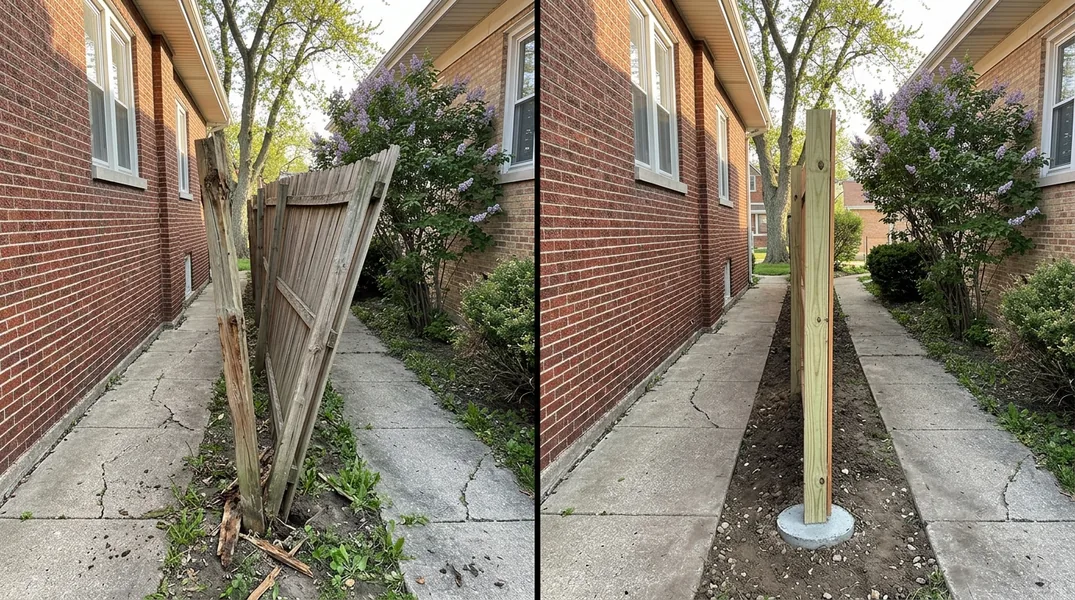
Why Chicago Fences Lean: The Perfect Storm of Soil and Weather
If you've stepped outside this spring and noticed your fence leaning at an angle, you're not alone. Leaning fences are one of the most common problems homeowners face in Chicago, and the reasons are deeply rooted in our local climate and soil conditions. Unlike many other parts of the country, Chicago's unique combination of heavy clay soil, freeze-thaw cycles, and moisture creates an ideal environment for fence failure.
The culprit isn't always poor installation or cheap materials. Rather, it's the interaction between our region's dense clay soil and the harsh winter weather that puts pressure on fence posts year after year. When you understand what's happening beneath the ground, you'll see why leaning fence repair and fence post replacement are such common services in our area. The good news is that recognizing these problems early can save you time and money.
Frost Heave: How Winter Pushes Your Fence Posts Out of the Ground
One of the primary reasons fences lean after winter is a phenomenon called frost heave. When water in the soil freezes, it expands, and this expansion can literally push fence posts upward and outward. In Chicago, where winter temperatures regularly dip below freezing for extended periods, frost heave is particularly aggressive. The repeated freeze-thaw cycles from November through March create continuous stress on the posts anchoring your fence.
Frost heave doesn't happen all at once. Instead, it's a gradual process where ice lenses form in the soil around the post. Each time the temperature drops below freezing, more water is drawn toward the post, freezes, and pushes the post slightly higher. By spring, a post that was perfectly vertical in fall may have shifted several inches, causing the entire fence line to lean or bow outward. This is especially problematic for Wood & Privacy Fence Installation, where the weight and rigidity of the fence can amplify the visual effect of even small post movements.
Heavy Clay Soil: Chicago's Biggest Challenge for Fence Stability
Chicago sits atop some of the heaviest clay soil in the Midwest, and this presents unique challenges for any structure anchored into the ground, including fences. Clay soil holds water exceptionally well, which means moisture remains trapped around your fence posts long after rain or snowmelt. This constant moisture exposure accelerates wood decay and creates the ideal conditions for frost heave to occur with maximum force.
Unlike sandy or loamy soils that drain quickly, clay soil compacts tightly around posts, creating hydrostatic pressure during freeze cycles. When water freezes in this dense soil, it has nowhere to go but to push outward and upward. Additionally, clay soil's poor drainage means that even in summer, the ground around your posts remains damp. This moisture wicks up into wood posts, causing rot from the ground line upward. Over time, a post weakened by rot becomes unstable and can no longer resist the lateral forces that frost heave and wind create. If you're seeing fence leaning after winter, the clay soil beneath your property is almost certainly a contributing factor.
Rotted Posts: The Hidden Damage Beneath the Surface
While frost heave and clay soil push and stress fence posts, rotted posts are what ultimately fail. Wood naturally absorbs moisture, and in Chicago's humid climate with heavy clay soil, that moisture never fully dries out. Once wood stays wet for extended periods, fungal decay begins. A post that looks solid above ground may be severely compromised below the soil line, where you can't see the damage.
Rotted posts lose their structural integrity, making them unable to resist the forces that frost heave and wind apply. A post that's 50 percent rotted internally might still stand upright in mild conditions, but the first significant frost heave or strong wind can topple it. This is why fence post repair and fence post replacement are so critical. Even if your fence isn't leaning yet, having posts inspected regularly can catch rot before it becomes a structural failure. The telltale signs include soft spots at the base of the post, discoloration, or a spongy texture when you press on the wood.
How to Identify Leaning Fence Problems Before They Worsen
Early detection of a leaning fence can prevent a small problem from becoming a major repair or complete replacement. Start by walking the perimeter of your fence and looking for posts that are visibly tilted away from vertical. Use a level or a plumb line if you want to be precise. Check the bottom of posts for soft wood, discoloration, or signs of rot. If you can push on a post and feel movement or flex in the wood, that's a warning sign that the post is weakened.
Pay special attention to the areas where posts meet the ground. This is where moisture accumulates and where frost heave pressure is greatest. If you notice that your fence leans more noticeably after a particularly harsh winter or heavy spring thaw, that's a sign that frost heave is active in your soil. The sooner you address these issues, the more options you have. A slightly leaning fence with a still-solid post might be straightened and reinforced, but a fence with multiple rotted posts may require full sections to be rebuilt. Contact Chicago Fence Pros at (872) 259-5832 to have a professional assess your fence's condition.
Leaning Fence Repair and Replacement Options in Chicago
When it comes to fixing a leaning fence, you have several options depending on the severity of the problem and the condition of your posts. For minor leans caused by frost heave but with still-solid posts, professional straightening and bracing may be possible. This involves carefully jacking the fence back to vertical and installing reinforcement brackets or additional support posts to prevent future movement. This approach works best when caught early and when the underlying posts aren't rotted.
For posts that are significantly rotted or when frost heave has caused permanent structural damage, fence post replacement is the most reliable solution. Replacing individual posts is often more cost-effective than replacing an entire fence section, especially if the fence boards and rails are still in good condition. During replacement, professionals can use concrete footings that extend deeper into the ground and may add gravel or drainage measures to reduce moisture accumulation around the new post. This helps prevent the same problem from recurring.
If your fence is older or multiple sections are affected, you might consider replacing it entirely with materials better suited to Chicago's climate. Vinyl & PVC Fence Installation is an increasingly popular alternative because vinyl doesn't rot and resists frost heave damage far better than wood. Whatever option you choose, the investment in proper repair now will extend your fence's life and protect your property.
When to Call a Professional for Fence Post Repair Near Me
While some homeowners attempt DIY fence repairs, leaning fence problems require professional expertise, especially in Chicago where soil and climate conditions are so challenging. A professional can accurately diagnose whether the problem is frost heave, rot, poor installation, or a combination of factors. They also have the equipment and knowledge to safely straighten or replace posts without damaging the fence or creating safety hazards.
Chicago Fence Pros specializes in identifying and fixing these exact problems. Our team understands the specific challenges that Chicago's clay soil and winter weather create for fences. Whether you need leaning fence repair, post replacement, or advice on whether your fence can be saved, we're here to help. Call us at (872) 259-5832 or visit our website to request a free estimate. We'll inspect your fence, explain what's causing the problem, and recommend the best solution for your property and budget.
Looking for a professional tree service in Chicago? Chicago Fence Pros responds fast for all your fence needs.
Get a Free Quote